CIOs are walking into major meetings with only a fraction of the information they need. Their software estates have exploded - some growing 100x in the past decade - leaving no individual or team capable of knowing every system in depth.
McKinsey reports that large enterprises now manage between 850 and 1,200 applications, and many global organizations operate far more. But scale hasn’t translated into clarity: even with extensive dashboards and documentation, leaders often enter discussions without the context required to make confident, timely decisions.
CAST is introducing an AI-powered application briefing capability to close that gap. The feature provides succinct, role-aligned explanations of what an application does, why it matters, and where its risks lie.
Why this matters now
This gap is becoming more urgent as enterprises accelerate cloud programs, invest in AI, and face rising pressure to reduce risk and cut costs. Technology decisions that once unfolded over quarters now happen in weeks or days. Yet the systems underpinning those decisions have grown more complex, more interconnected, and more business-critical.
A single system may carry a decade of history, multiple rewrites, and a thicket of dependencies only a few engineers understand. Still, executives are expected to interpret that complexity after just a few minutes of preparation.
The first part of many IT meetings is spent reconstructing the facts on the ground. Leaders have to ask: What does this system support? Who relies on it? Why has modernization stalled? What risk are we managing here? The information exists somewhere - slide decks, internal wikis, long-archived reports, and scattered tribal knowledge - but rarely in one place. By the time everyone aligns on a shared understanding, valuable decision-making time has already passed.
Complicating matters further, key stakeholders often speak in different languages. Business leaders talk in terms of customer outcomes and operational impact. Architects describe domains, patterns, and interfaces. Engineers focus on dependencies, defects, and performance. Without a baseline, CIOs and their deputies frequently become interpreters rather than strategists.
Dashboards haven’t solved this problem. While they provide metrics, they don’t explain why those metrics matter, how they relate, or what questions executives should really be asking.
Decades ago, intelligence agencies confronted a similar challenge. They addressed it with narrative briefings - condensed, contextualized accounts designed to help senior leaders navigate complex information quickly.
A similar shift is emerging within the field of software intelligence. AI-generated briefings synthesize an application’s purpose, business relevance, opportunities, risks, and technical posture into a concise narrative.
Analysis created for VP of Product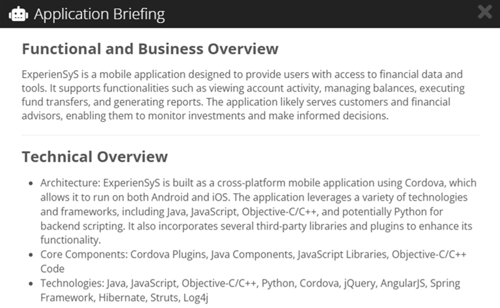
They also adjust based on the role of the reader: a CIO may see strategic and financial implications, while a compliance leader receives regulatory context or operational risk factors. The goal is not to replace engineers but to ensure executives are grounded before discussions begin.
Delivering information matching user’s background knowledge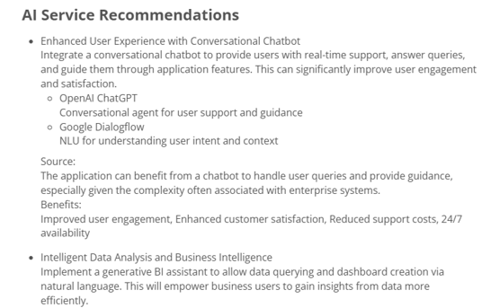
When leaders begin with a common baseline of understanding, conversations shift from reconstructing the past to determining the best path forward.
Roadmap appropriate for the level of responsibility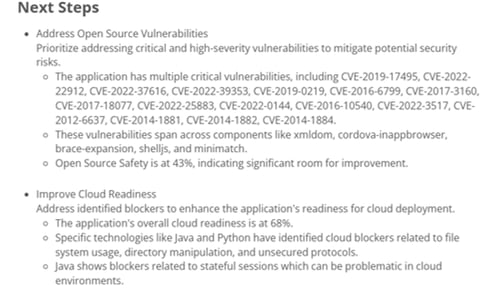
The question now is not whether leaders need this level of preparation, but how quickly enterprises will adopt it, and how much stronger their decisions will become once they do.
